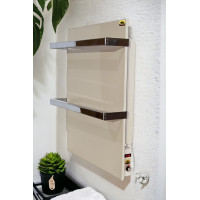
The bathroom is a rather specific room with its own "atmosphere". Whether it's an apartment bathroom or a private home bathroom, its main features are high humidity and high temperature.
In this room we completely undress, take a bath or shower, so the microclimate and air temperature must provide thermal comfort for the household, regardless of the time of year.
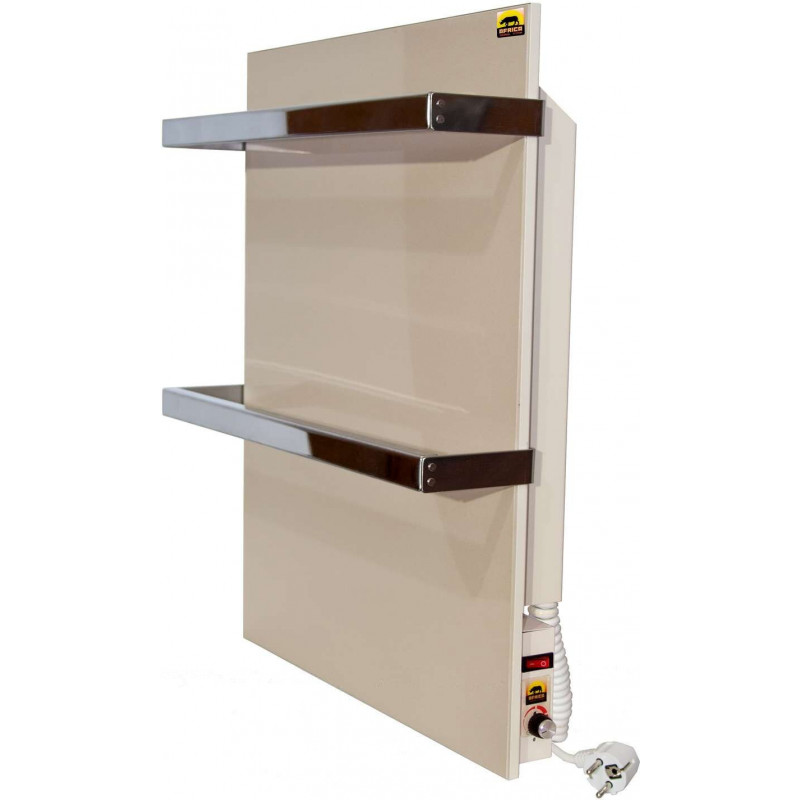
How can this be achieved? First of all, the use of modern heating systems, among which are floor heating systems, for example, or wall heaters. One of the most important elements of any bathroom was and still is a towel warmer, which allows not only to dry things after washing and towel after taking a shower but also heats the air additionally.
Heating options
You can use towel rails of different types and designs, and they will use different energy sources. The main options on the market remain:
- water towel rails;
- electric towel rails.
In the first case, the hot water of the central or autonomous heating system is responsible for heating, in the second case, a connection to the 220-volt network is used.
What to prefer? It is important to understand that centralized heating is usually turned off during the warm season. From early spring to late fall, your water towel rail will serve only a decorative function.
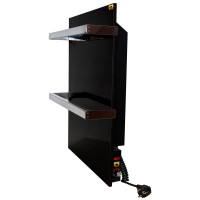
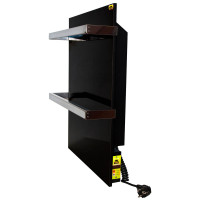
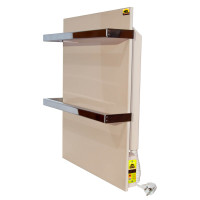
If you want to get the most out of this device and feel always comfortable in the bathroom, you should pay attention to electric models in general and ceramic infrared towel rails in particular. Such devices are independent of central or autonomous heating, you can turn them on as soon as you need to heat the bath or dry laundry.
The principle of operation of electric models
Electric heating in the bathroom is inexpensive, while modern temperature control systems allow additional savings on energy resources. Electric towel rails are most often wall-mounted devices, working on a different principle.
Standard electric models heat the air rising up on the principle of circulation. Infrared ceramic devices use the convection principle, heating furnishings and the human body, after which the air is already heated by them.
Thus they are able to create a comfortable microclimate in the bathroom in quite a short time. Choosing towel rails for the bathroom, pay attention to their level of safety and protection against splashing and high humidity.
Information about moisture and water protection can be found in the manual or on the packaging of the towel radiator. There should also be information about the distance at which it can be placed from the bathtub, shower, or washbasin.
Features of choosing a towel dryer
Outside the heating season, when the central heating batteries are cold, there is often a problem of drying wet towels. To avoid this, you should install a properly selected towel dryer in the bathtub, which can also be used to dry washed clothes.
It can be mounted anywhere on the wall, all you need is access to an electrical outlet. Choosing such a heating device for the bathroom, pay attention to:
- the dimensions of the device;
- type of construction;
- design features;
- the number of available "ribs" on which you can hang things;
- power consumption.
As a rule, modern towel warmers consume relatively little. Their power ranges from 50 to 200 watts on average.
Related Articles
The perfect choice for the bathroom
Properly selected heaters and towel rails for bathrooms are a great way to ensure a comfortable temperature in such a room all year round and avoid the appearance of mold and mildew. Choosing such equipment, it is necessary to take into account that they must be water-resistant and productive.
Ceramic towel rail - innovative solutions to simple problems
There are water or electric towel rails in the bathroom of almost any home. Being a simple enough, but functional device, it allows you to dry any item of fabric quickly enough. But modern technology has not been left behind even in solving the simplest household tasks.